
Best Water Hardness Test Kits (2026): Know Your Number Before You Buy a Filter
I've spent a lot of time going through EPA water quality reports and city-level hardness data here on TapWater.org. And if there's one thing I keep coming back to, it's this: city averages don't tell the full story. The official data for Phoenix might say 17 GPG, but what's actually coming out of your tap depends on your building's pipes, your water heater, and how recently your utility blended sources.
A water hardness test kit is the cheapest and fastest way to find out — most run $10–15, take 15 seconds, and can save you from buying a filter that's either overkill or completely wrong for your water.
Some links below are affiliate links. If you buy through them, I earn a small commission at no extra cost to you — it's how I keep this site running.
Our Top 3 Picks
Updated March 2026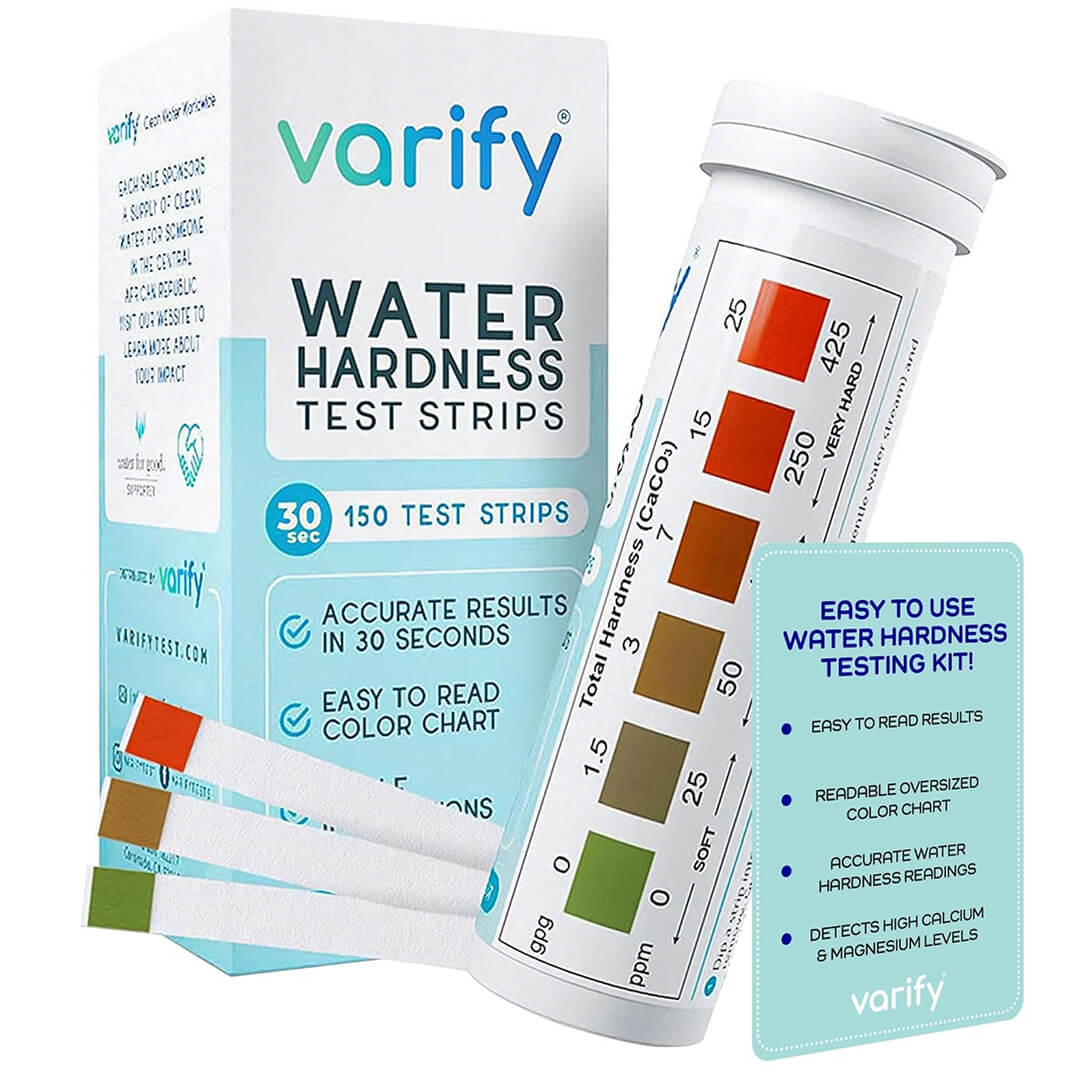
1. Varify Water Hardness Test Kit
by Varify
150 strips · 0–425 ppm / 0–25 GPG
I started recommending Varify after seeing it consistently outperform cheaper alternatives in independent testing. What matters in test strips isn't the number of strips in the bottle — it's whether the color change is distinct enough to actually read accurately. Varify's color blocks are well-separated, which is more important than it sounds when you're trying to distinguish between 150 ppm and 200 ppm in mediocre kitchen lighting.
The strips test specifically for calcium and magnesium — the two minerals responsible for hard water buildup. You dip a strip for about a second, shake off the excess, and compare it to the color chart after 15 seconds. The color stays stable long enough to read accurately, which is a common failure point with cheaper strips that keep shifting after the read window closes.
What I like is the GPG markings on the chart alongside the ppm values — if you're cross-referencing against TapWater.org city data (which uses GPG), you don't have to do any conversion math. 150 strips is also genuinely more than you need for a household, which means you can test multiple faucets, your shower, and your water softener output without burning through the pack.
What we liked:
- • Best color separation. Easy to read even in poor lighting.
- • GPG + ppm chart. No conversion math needed.
- • 150 strips. Enough for whole-house testing.
- • Stable color. Doesn't shift after the read window.
What we didn't like:
- • Less reliable below 50 ppm. Colors get hard to distinguish at soft water levels.
- • Not ideal for softener calibration. Use the Hach drop kit for precise low-range readings.
Bottom line: The best everyday water hardness test for most households. Accurate enough for filter decisions, plenty of strips, and easy to read. Step up to the Hach drop kit only if you need precision below 50 ppm.
2. DIPSTIK Water Hardness Test Kit
by DIPSTIK
150 strips · 0–425 ppm
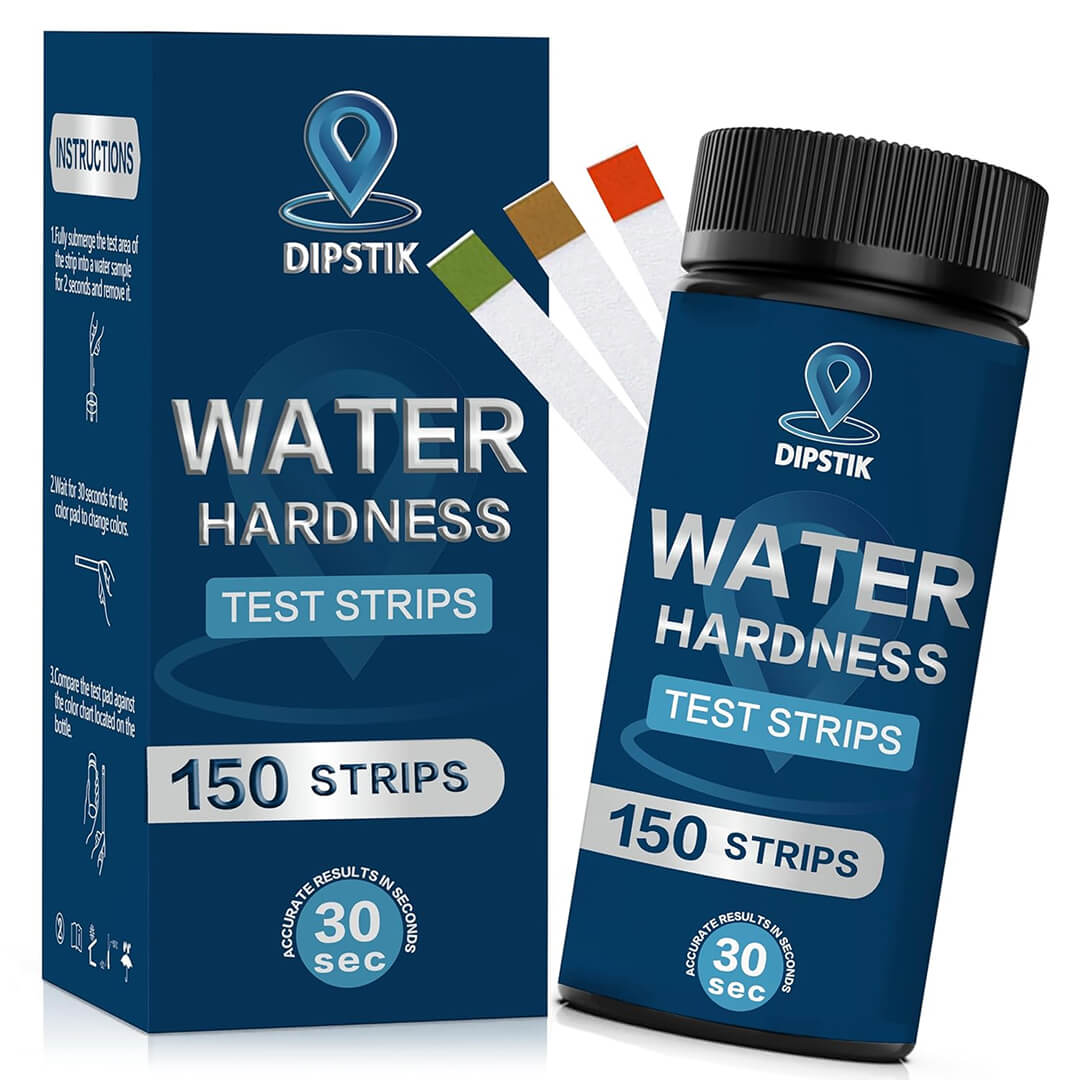
The DIPSTIK kit is straightforward: 150 hardness-only strips, same 15-second read window, same ppm range as the Varify. The color chart is slightly less detailed — fewer intermediate color blocks — which means your reading will land in a wider range (e.g., "somewhere between 150–250 ppm" rather than a tighter estimate).
For most renters or anyone who just wants to confirm whether their water is hard before deciding whether to buy a shower filter, that's fine. You don't need lab precision to know that 300 ppm water is going to scale your coffee maker. Where the DIPSTIK falls slightly short is at mid-range hardness levels where the distinction between "moderately hard" and "hard" matters for filter selection — at that point, the Varify's better color separation is worth the extra $3.
What we liked:
- • Cheapest option. $7.99 for 150 strips.
- • Does the job. Clear enough for a yes/no hard water answer.
- • Same strip count as Varify. 150 strips per bottle.
What we didn't like:
- • Less detailed color chart. Wider ranges, harder to pinpoint exact ppm.
- • Mid-range readings are vague. 150–250 ppm range is hard to narrow down.
Bottom line: The best choice if budget is the main concern and you just need a quick yes/no on whether your water is hard. For $3 more, the Varify offers better precision — but the DIPSTIK gets the job done.
3. Hach Total Hardness Test Kit Model 5-B
by Hach
Drop titration · Lab-grade results
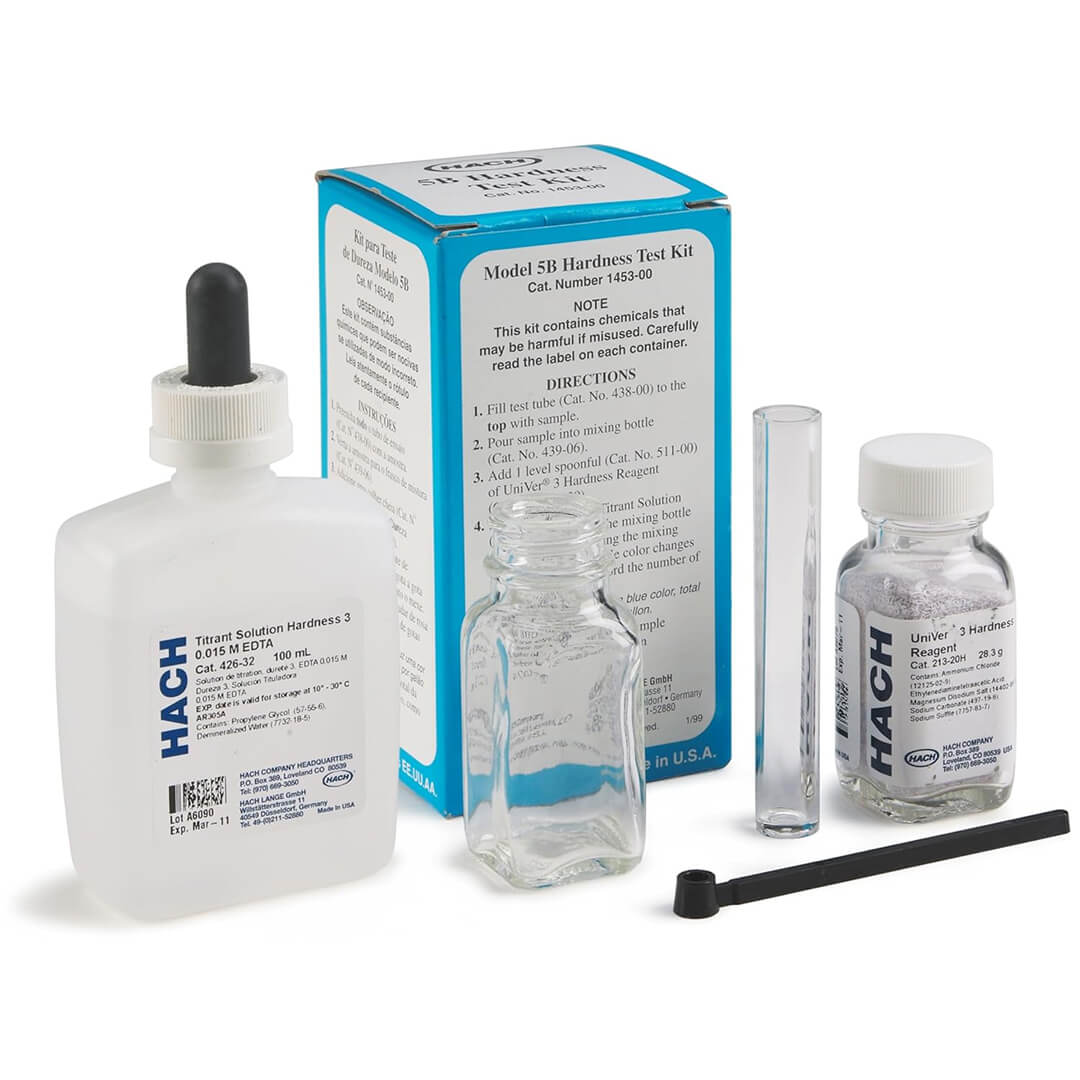
The Hach 5-B is a different category of product entirely. Instead of dipping a strip, you use drop-count titration: you add reagent drops to a measured water sample until a color change occurs, then count the drops. Each drop corresponds to a precise ppm value. It's the same methodology municipal water labs use — not as fast as strips, but significantly more accurate, particularly at low hardness levels where strip color differences become unreliable.
I'd point someone toward the Hach kit in three scenarios: you just installed a water softener and need to verify the output is below 50 ppm; you have well water and want reliable baseline data before making any treatment decisions; or your tap hardness is high enough that you're evaluating expensive whole-house systems and want an exact number before spending $1,000+.
The 5-B is not the product for quick spot-checks. The reagents have a shelf life, the process takes a few minutes, and there's a small learning curve on the first use. But for what it is — a professional-grade hardness test you can run at home — $35 is genuinely inexpensive.
What we liked:
- • Lab-grade accuracy. Same method municipal labs use.
- • Precise at low levels. Reliable below 50 ppm where strips fail.
- • Professional standard. Used by plumbers and water treatment pros.
- • $35 is inexpensive for professional-grade equipment.
What we didn't like:
- • Takes a few minutes. Not a quick dip-and-read test.
- • Reagents expire. Shelf life is limited once opened.
- • Small learning curve. First-time use requires reading instructions carefully.
Bottom line: The right choice when precision matters — softener calibration, well water baselines, or justifying a $1,000+ whole-house system purchase. Overkill for a quick hardness check, but unbeatable for accuracy.
Also Worth Considering: Varify 17-in-1 Complete Water Test Kit
Varify 17-in-1 Complete Water Test Kit
by Varify
100 strips + 2 bacteria tests · Tests 17 parameters
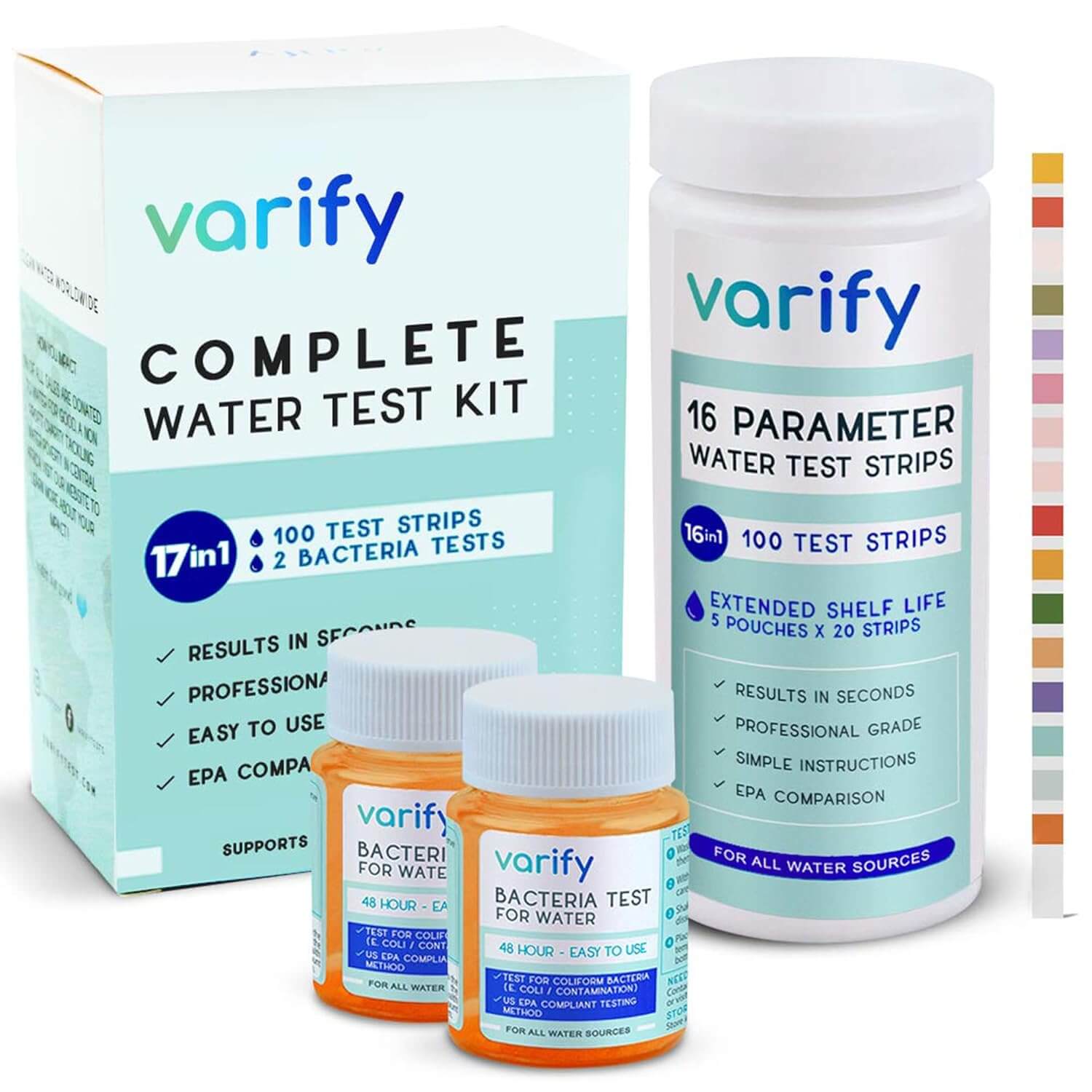
If you live in a home built before 1986, are on well water, or have been reading about lead or PFAS contamination in your area — hardness is probably not the only thing you should be testing for. Older homes with pre-1986 plumbing can have lead pipes or lead solder, and no hardness test strip will catch that.
The Varify 17-in-1 kit tests for hardness alongside lead, chlorine, pH, nitrate, nitrite, fluoride, copper, bacteria, and 8 other parameters on the same strip. It takes the same 15 seconds as a hardness-only strip, costs just a few dollars more, and gives you a much more complete picture before you make any filter or treatment decisions. If your city shows up on TapWater.org with elevated lead or PFAS violations, start here rather than with a hardness-only kit.
Note: the 17-in-1 strips are slightly less precise on hardness specifically compared to the Varify single-parameter kit — the color pads are smaller. But for a first-pass screening across multiple contaminants, that trade-off is worth it.
Looking for a comprehensive lab-grade water test instead of DIY strips? Check out our Best Water Test Kits 2026 guide — it covers professional lab tests that screen for 50–100+ contaminants including lead, PFAS, and bacteria.
Got Your Number? Here's What to Do With It
Once you have your result in ppm or GPG, plug it into our Water Hardness Calculator. Enter your hardness level and it will tell you exactly what it means for your home — whether you need a filter, what type makes sense, and how your tap compares to your city's average. It takes 30 seconds and saves you from buying the wrong thing.
Open Water Hardness CalculatorStrips, Drop Kits, or Digital — Which Should You Use?
Test strips are the right starting point for almost everyone. They're fast, require no setup, and are accurate enough to decide whether you have hard water and what type of filter makes sense. The main limitation is at the lower end of the scale (under 75 ppm), where color differences become subtle — but in that range you'd be looking at soft water anyway, which is rarely the problem.
Drop titration kits like the Hach 5-B are worth the extra step when precision matters: calibrating a water softener's salt dose, verifying filter output, or establishing a baseline before making a treatment decision. Each drop equals exactly 1 GPG, which is a level of precision strips can't match.
What about digital testers? This is where a lot of people get tripped up. The inexpensive digital "water hardness testers" on Amazon for $10–15 are almost universally TDS meters — they measure Total Dissolved Solids, not water hardness. TDS is a measure of everything dissolved in your water: salts, metals, minerals, and more. It is not the same as hardness. A water supply can have high TDS and low hardness, or vice versa. If you use a TDS meter to estimate your water hardness and make a filter purchase based on that reading, you may end up with the wrong product entirely. True digital hardness meters that measure calcium and magnesium ion concentration directly exist, but they start at $150+ and are designed for lab or industrial use — not something a homeowner needs. For household use, strips give you what you need in 15 seconds for $13.
Choose Strips If:
- + You want a quick yes/no answer on hard water
- + You're deciding whether to buy a filter
- + You want to test multiple faucets quickly
- + Budget is a consideration ($10–16)
Choose Drop Titration If:
- + You're calibrating a water softener
- + You need accuracy below 50 ppm
- + You're evaluating a $1,000+ treatment system
- + You want a reliable seasonal baseline
Skip Digital TDS Meters
Cheap "digital hardness testers" ($10–15) are TDS meters — they measure Total Dissolved Solids, not hardness. TDS ≠ hardness. A high-TDS reading doesn't mean hard water, and vice versa. True digital hardness meters start at $150+ and are designed for labs, not households.
Frequently Asked Questions
Are water hardness test strips accurate enough?
For the purpose of deciding whether you have hard water and what type of filter makes sense, yes — strips accurate to ±10–15% are more than sufficient. For softener calibration or appliance warranty documentation, use a drop titration kit like the Hach.
What's the difference between GPG and ppm?
Both measure the same thing — dissolved calcium and magnesium — in different units. GPG (grains per gallon) is more common in the US water treatment industry; ppm (parts per million) appears on most test strips. Divide ppm by 17.1 to convert to GPG, or enter your result directly into our Water Hardness Calculator — it handles the conversion and tells you what to do next.
Can I test my water softener output with these strips?
Yes — testing softener output is one of the most useful applications for hardness strips. The output should read under 50 ppm if the softener is operating correctly. If it reads higher, the salt dose may need adjusting or the resin may need service. For readings below 50 ppm, switch to the Hach drop kit for better accuracy at low concentrations.
My tap reading is higher than my city's average on TapWater.org — why?
City data reflects the water leaving the treatment facility, not what arrives at your tap. In older buildings, water can pick up calcium and other minerals from pipes between the street and your faucet. Hot water heaters also concentrate minerals over time. A difference of 2–3 GPG above the city average is normal; significantly higher readings are worth investigating further.
How often should I test?
Your water hardness doesn't change dramatically day-to-day, but it shifts seasonally — utilities blend from different sources across the year, and drought conditions can increase mineral concentration. If you're monitoring a softener or tracking quality in a home with older pipes, testing every 3–6 months is reasonable. For a one-time filter purchase decision, a single test is enough.
Need More Than a Hardness Test?
If you're concerned about lead, PFAS, bacteria, or other contaminants beyond just water hardness, check out our comprehensive guide to lab-grade and DIY water test kits.
Best Water Test Kits 2026: Our Top 4 Picks Reviewed