
Best Well Water Test Kits (2026): What Wells Actually Need
If your water comes from a private well, nobody is testing it but you. The Safe Drinking Water Act covers public water systems only — for a well there is no EPA oversight, no annual Consumer Confidence Report, and no violation notice if something goes wrong. Every safeguard a city water customer takes for granted is, for a well owner, a test kit and a calendar reminder.
That changes what "the best test kit" means. This guide draws on the same documentation comparison behind our main home water test kit guide — published analyte lists, detection limits versus EPA thresholds, lab accreditation, and shipping terms — but ranks the kits for how wells actually fail, not how city taps do.
Some links below are affiliate links. If you buy through them, we earn a small commission at no extra cost to you.
Why Well Water Fails Differently Than City Water
City water's biggest risks come from treatment and distribution: chlorine byproducts formed at the plant, and lead picked up from aging pipes on the way to your tap. A well skips all of that — and picks up a different set of problems straight from the ground.
Bacteria come first. A well is an open connection to the aquifer. Surface water intrusion after heavy rain or flooding, a cracked casing, or a failing septic system nearby can introduce total coliform or E. coli at any time, with no change in taste or appearance. This is why the CDC puts bacteria at the top of the annual testing list.
Nitrate is the agricultural risk. Fertilizer runoff and septic leachate drive nitrate into groundwater, and rural wells sit closest to both sources. Elevated nitrate is particularly dangerous for infants, and you cannot taste, smell, or boil it away — boiling actually concentrates it.
Arsenic is the geological risk. In large parts of the US, arsenic occurs naturally in the rock formations that aquifers run through. A well can serve perfectly safe water for years while the house next door — drilled into a different seam — tests high. Only a lab test can tell you which well you have.
Corrosive water makes plumbing a suspect. Untreated groundwater is often more acidic than treated city water, which means it leaches more lead and copper from older fittings, solder, and fixtures between the wellhead and your glass.
One honest note: our database covers municipal systems — EPA SDWIS violations and city Consumer Confidence Reports. Private wells appear in no public database at all. That absence is not reassurance; it is exactly why testing is on you.
The Best Well Water Test Kits
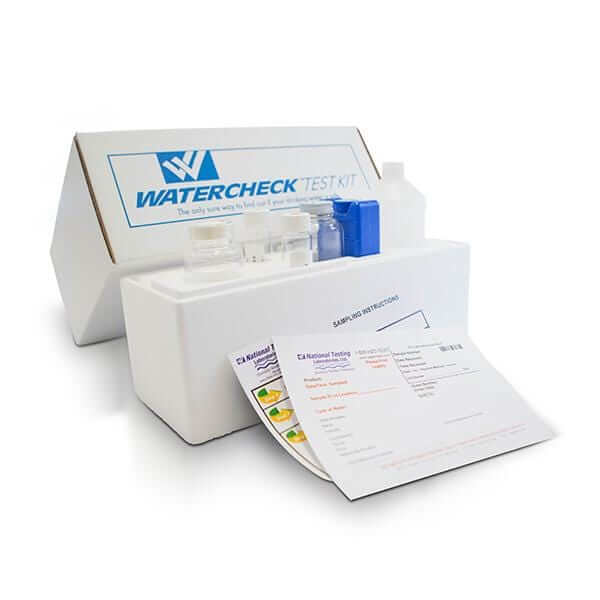
1. WaterCheck Deluxe
by National Testing Laboratories
107 items · Lab results in 10-14 days
On the main guide, WaterCheck placed behind Tap Score because city water users rarely need its extra coverage. For a well, that ranking flips — and so does the positioning: NTL builds WaterCheck specifically for wells and springs (their separate CityCheck line covers municipal supplies). The exact things that make the Deluxe panel oversized for a city tap — pesticides, herbicides, PCBs, and a broad metals panel on top of bacteria and nitrates — are the well owner's priority list.
107 items from a single sample is the closest a homeowner can get to the baseline a new well deserves. Know the trade-offs before ordering: NTL quotes 10–14 days for results, the report is a dense PDF rather than a friendly dashboard, and return shipping is not included — overnight return is required for valid bacteria results, typically $45–$100 depending on location. For an every-2-3-years comprehensive baseline, we think that trade is worth it.
Prefer a dashboard-style report? SimpleLab's Essential Well Water Test (50 contaminants) is the friendlier-reporting alternative, at the cost of the pesticide and PCB coverage.
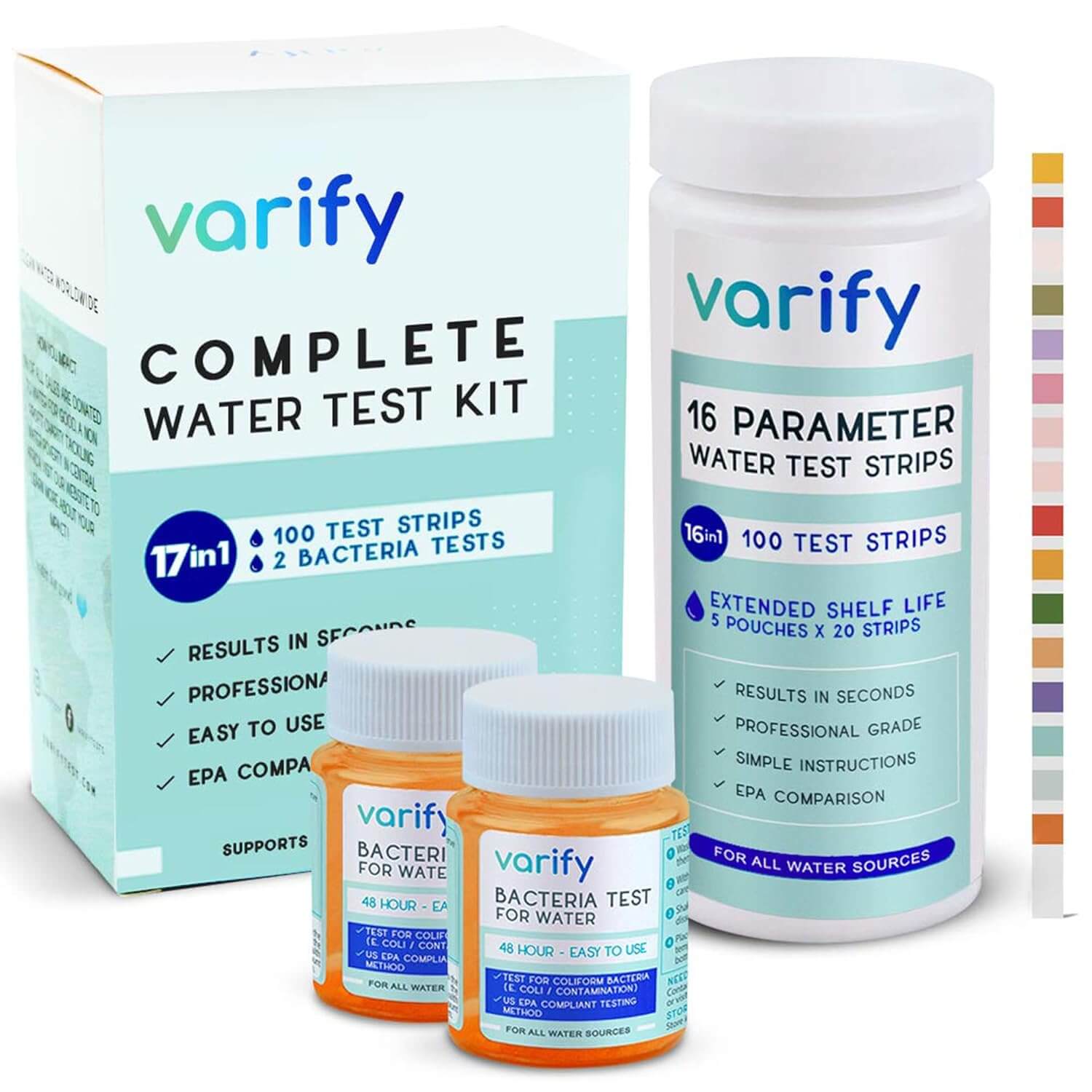
2. Varify 17-in-1 Strips
by Varify
17 parameters · Results in minutes
A well changes with the seasons — spring runoff, summer drawdown, the neighbor's new fertilizer schedule. Strips are how you notice that change between lab tests. One box covers monthly checks for years, and the two included 48-hour bacteria tests are the single most useful DIY tool a well owner has after a flood or a plumbing repair.
Know the limits: strips read pH, hardness, iron, and chlorine by color match, but they cannot quantify arsenic or lead at health-relevant levels and detect no pesticides. Treat any surprise strip result as a trigger for a lab test, not a verdict.
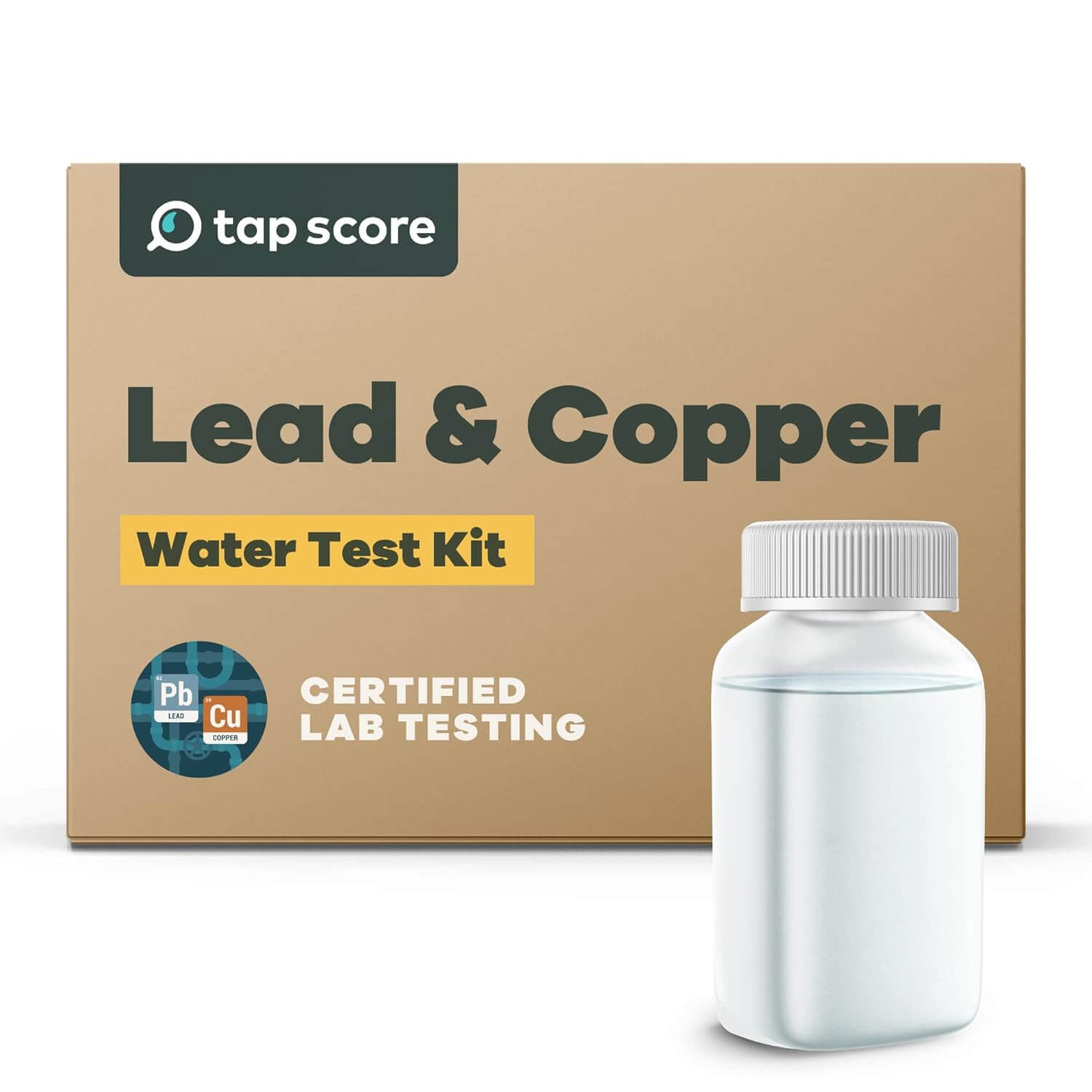
3. Tap Score Lead & Copper Test
by SimpleLab
Lead + copper lab analysis (plus pH self-test) · 3-5 days
Groundwater itself rarely carries lead — your plumbing adds it. Because untreated well water is often more corrosive than treated city water, older well houses with brass fittings or pre-1986 solder can leach meaningful lead even when the aquifer is clean. This focused lab test answers that one question precisely, in parts per billion, for homes where the full WaterCheck panel is not due yet.
Prices verified August 14, 2026 and may vary.
The Well Testing Schedule That Actually Works
The CDC's guidance for private wells is annual testing for total coliform bacteria and nitrates at minimum. Built into a practical routine with the kits above, that looks like this:
- 1Now (or when you buy the house): a comprehensive WaterCheck Deluxe baseline. You cannot monitor drift from a baseline you never measured.
- 2Every year: bacteria and nitrate at minimum — the CDC floor.
- 3Monthly: a Varify strip for pH, hardness, iron, and chlorine drift; log the readings.
- 4Immediately after: flooding, well or plumbing work, a taste/smell/color change, or a neighbor's bad test — run the bacteria vials, and follow up with a lab panel if anything is off.
Water heavy in minerals? Hardness is a comfort issue, not a safety one — our hardness test kit guide covers that side separately.
Well Water Testing FAQ
How often should I test my well water?
The CDC recommends testing private well water at least once a year for total coliform bacteria and nitrates, with a comprehensive lab panel every 2–3 years. Test immediately after flooding, any work on the well or plumbing, a change in taste, smell, or appearance, or if a neighbor discovers contamination.
What should a well water test kit cover?
The priority panel for a private well is bacteria (total coliform and E. coli), nitrate/nitrite, and arsenic, followed by lead, iron, manganese, and — near farmland — pesticides and herbicides. That is a different priority list than city water, where lead and disinfection byproducts matter most.
Are DIY strips enough for well water?
No. Strips are useful for monthly monitoring between lab tests — especially for pH, hardness, iron, and gross changes — but a well baseline needs a certified lab panel. Strips cannot quantify arsenic or lead at health-relevant levels, and no strip detects pesticides or VOCs.
Does the EPA regulate private wells?
No. The Safe Drinking Water Act covers public water systems only. If you own a well, no agency tests your water, no Consumer Confidence Report is published for it, and no violation will ever be recorded — testing is entirely the owner's responsibility.
On city water instead? Your risk profile is different — start with our main home water test kit guide, which also documents the evaluation methodology behind both pages: a documentation-based comparison of published analyte lists, detection limits, and vendor terms — checked against our own EPA SDWIS dataset.